We began this year's Outlook by highlighting that Southeast Asia's energy transition faces an execution challenge, not a funding one. Subsequent editions, covering the USD 100 billion build-out and the grid as a constraint, reinforced this. In 2026, the execution gap became a set of specific tasks. This final Outlook reviews these findings and outlines what 2027 must accomplish.
The demand is no longer in doubt
While some uncertainties remain, the scale of growth is clear. According to the International Energy Agency, Southeast Asia will account for nearly a fifth of global energy demand growth to 2035, with electricity demand rising about twice as fast as overall energy use. Over the next decade, the region will add electricity demand equal to Japan's current generation. Residential air conditioner stock is expected to triple by 2035, and data centres are emerging as significant new sources of demand in several countries. [1]
Supply is growing, but not fast enough to meet demand. Renewable capacity was about 120 GW in 2024 and is projected to nearly triple by 2035 under current policies. While this is significant progress, it remains insufficient. Without structural change, the region's energy import bill could rise from over USD 80 billion in 2024 to around USD 245 billion by 2035, as power-sector gas demand increases by more than 60 per cent and domestic supply declines by a third to 2050. [1] This decade, the region must determine how much of its energy future to import versus build domestically.
The capital is arriving — but it is thin, and it is picky
Investment is rising. Total energy investment in the region exceeded USD 100 billion in 2025, and the IEA projects a 35 per cent increase over the next decade under current policies, nearly doubling if announced pledges are met. [1] However, two factors limit progress. First, scale: Southeast Asia receives about 3 per cent of global energy investment despite representing 9 per cent of the world's population, indicating underinvestment. Second, selectivity: capital is increasingly focused on execution risks identified this year.
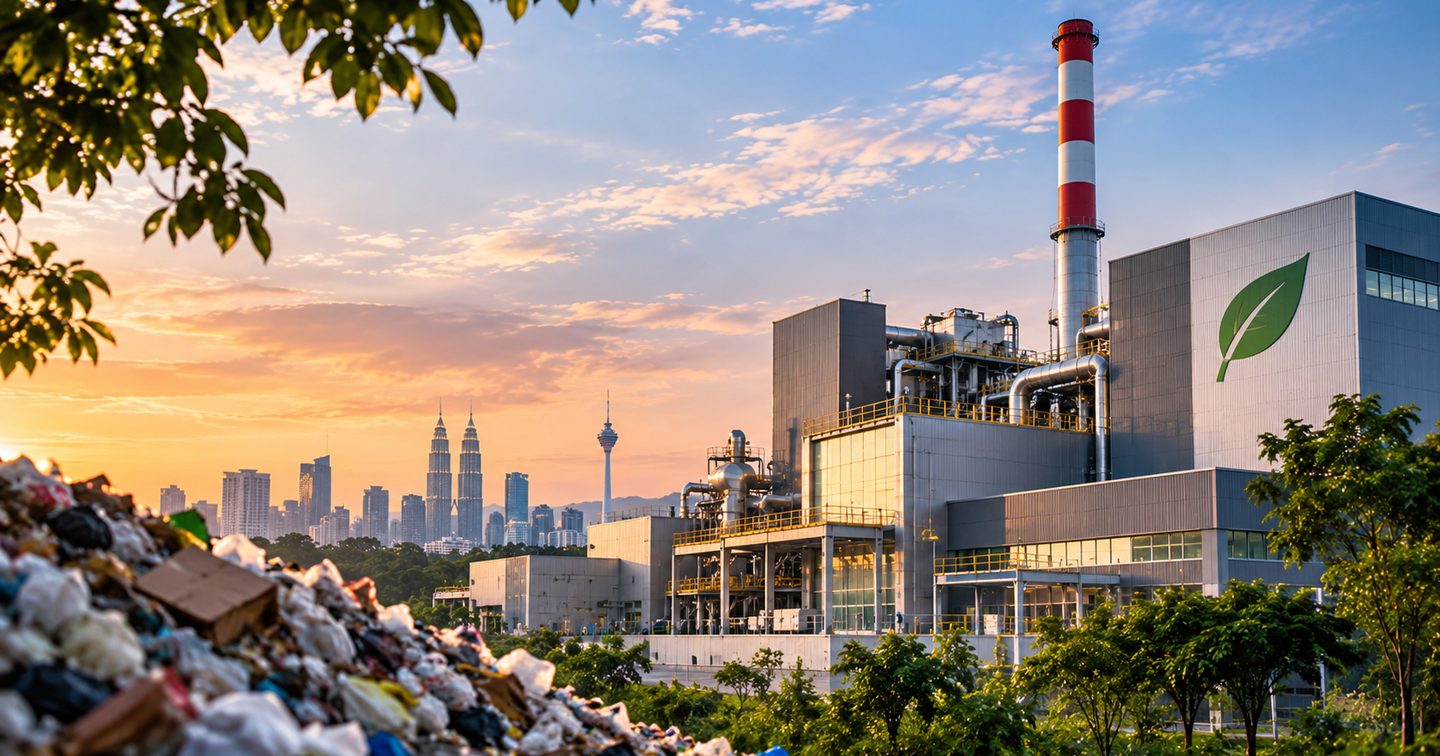
This theme has been central to our 2026 publications. In Outlook #2, we identified the grid, not generation, as the main bottleneck. The IEA projects that transmission and distribution networks will more than double in length by 2050, requiring over USD 300 billion in grid investment between 2025 and 2040. [1] In De-Risking the Build, we showed that the primary driver of clean power pricing is the cost of capital, which reflects manageable risks rather than a fixed market feature. Our wind analyses highlighted the gap between resource availability and project readiness, while the AI power wave showed demand outpacing grid capacity. The Carbon Tax piece noted that Malaysia ended the year without a domestic carbon price but faced a rising external one, emphasising that readiness, not announcements, is critical. Our recent work on asset integrity and waste-to-energy reinforced this at the asset level: returns are determined early, through design and feedstock decisions.
These are execution challenges, not financing issues. Success in 2027 will depend on addressing them.
2027: the year of connection
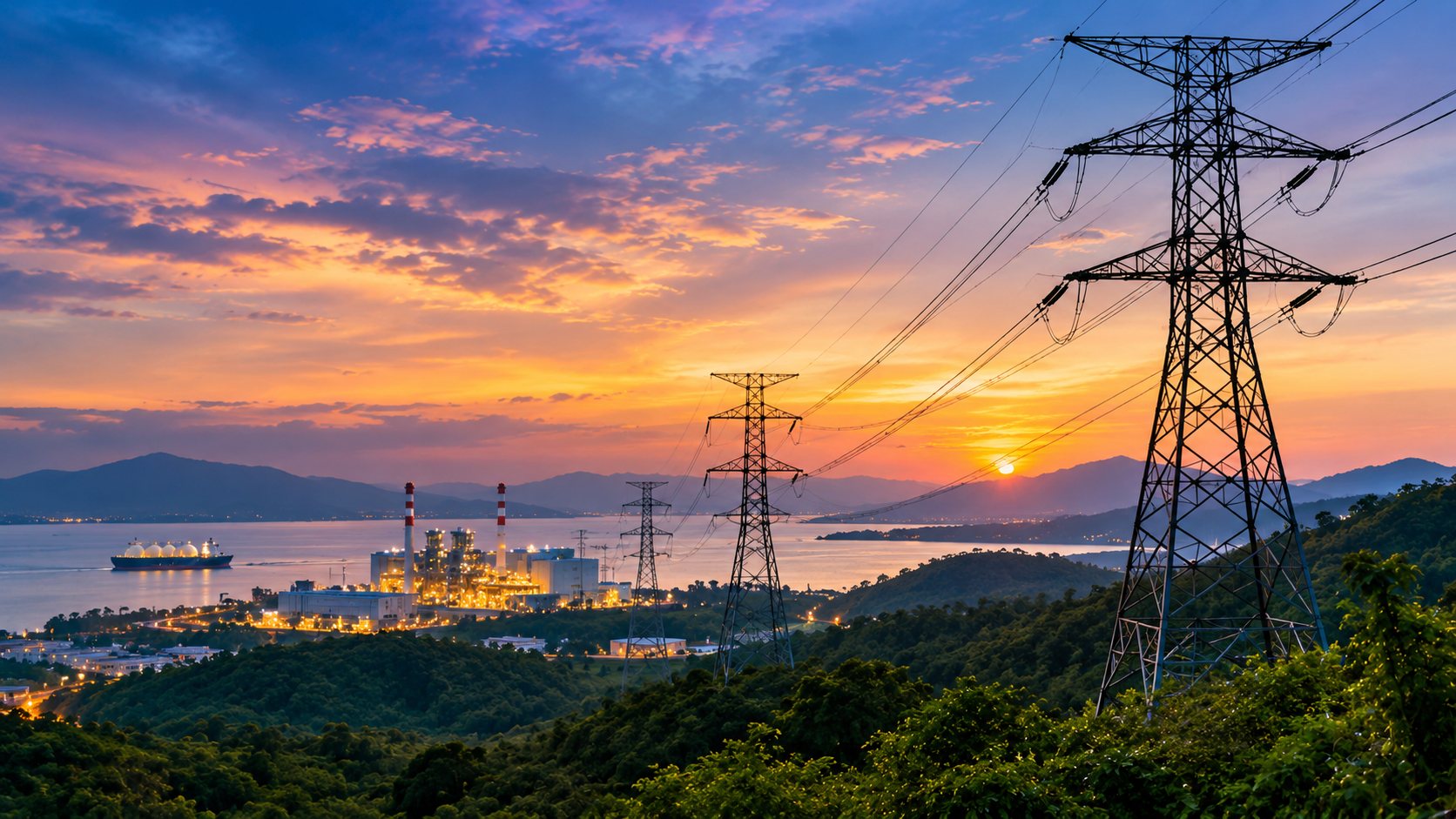
If 2026 identified the region's constraints, 2027 must begin to address the most significant ones. The timing is favourable: Singapore will chair ASEAN in 2027, followed by Thailand in 2028, and both have indicated plans to use their consecutive chairmanships to advance the long-delayed ASEAN Power Grid. Singapore is expected to progress the region's submarine power-cable framework during its term. [2][3]
The opportunity is significant, but the starting point is modest. ASEAN had about 2.8 GW of operational cross-border interconnection capacity in 2024, with an additional 13.7 GW planned by 2040 and six submarine interconnections identified. The goal is fully integrated regional grid operations by 2045, serving over 680 million people. [2] Initial funding is in place: the ASEAN Power Grid Financing Initiative, launched in late 2025, includes US$2.5 billion from the World Bank and up to US$10 billion from the Asian Development Bank over ten years, compared to the IEA's estimated US$27 billion interconnector cost to 2040. [1][2]
| Marker | Figure |
|---|---|
| Operational cross-border interconnection (2024) | 2.8 GW |
| Further interconnection planned by 2040 | +13.7 GW |
| Grid investment needed, 2025–2040 | > US$300 billion |
| Cross-border interconnectors to 2040 | ~ US$27 billion |
| ASEAN Power Grid Financing Initiative (World Bank + ADB) | US$2.5bn + up to US$10bn |
| Target: fully integrated regional grid operations | 2045 |
The main challenge is no longer engineering or funding. The main challenge is now regulation and coordination. Cross-border agreements, wheeling charges, and market rules are essential to turn planned infrastructure into operational projects. As one Singaporean official noted this year, cross-border projects are always difficult, and the real challenge lies in the rules. This is the execution gap at its largest: building a regional grid depends not on ambition or capital, but on the persistent, detailed work required to deliver it. Indicators will show in 2027 whether diagnosis is translating into delivery. First, monitor the grid: whether Singapore's chairmanship turns the submarine-cable framework and financing initiative into committed, bankable interconnection projects rather than additional memoranda. Second, observe the cost of capital: whether the risk premium on clean-energy projects narrows as offtake, currency, and permitting risks are systematically addressed. Third, assess asset-level readiness: whether carbon accounting, grid-connection plans, and integrity strategies become prerequisites rather than afterthoughts, as capital increasingly requires.
For investors and developers, this year's message presents an opportunity. In a region with proven demand and clear constraints, those who can accurately assess execution risk and position themselves at the market, project, and asset levels will have an advantage. This is the focus of our work and the central question of this series: not whether Southeast Asia will build, but who will be prepared when it does. If you are considering this as you plan for 2027, we welcome a conversation. Talk to us →
Sources
- International Energy Agency — “Southeast Asia Energy Outlook 2026 (executive summary)” (region ≈20% of global energy demand growth to 2035; electricity growing ~2× energy use; energy investment >US$100bn in 2025 (≈3% of global); grid investment >US$300bn 2025–2040; interconnectors ~US$27bn to 2040; import bill >US$80bn (2024) to ~US$245bn (2035); renewables ≈120 GW (2024))
- Eco-Business — “Asean Power Grid: Singapore, Thailand launch two-year push to clear hurdles by 2028” (15 September 2026: 2.8 GW operational interconnection (2024), +13.7 GW planned by 2040; six submarine interconnections; integrated grid by 2045; ASEAN Power Grid Financing Initiative)
- The Star (AseanPlus) — “Singapore to advance Asean power grid, subsea cable framework during 2027 chairmanship” (25 October 2026)
Part of the Ezra & Macquarie Insights series on where capital, risk and capability are moving across Asia.