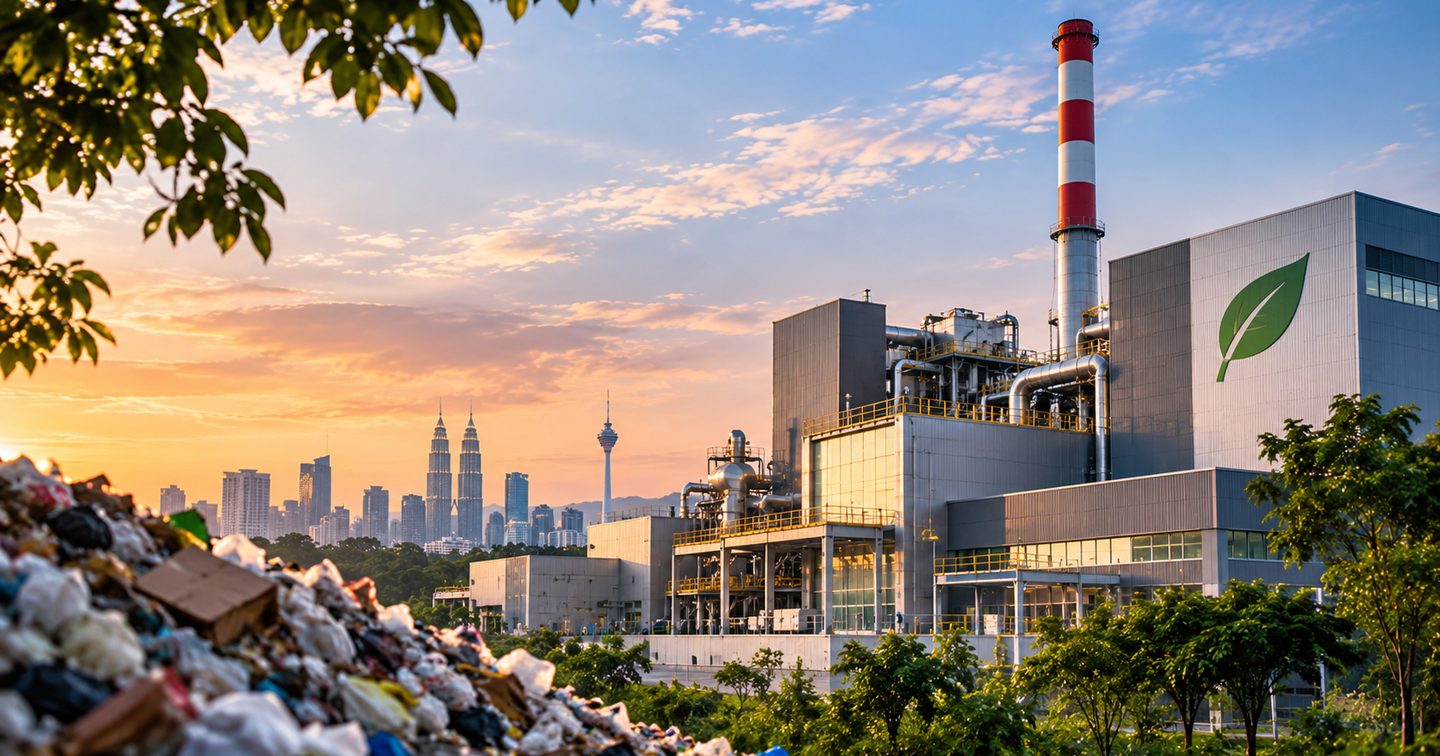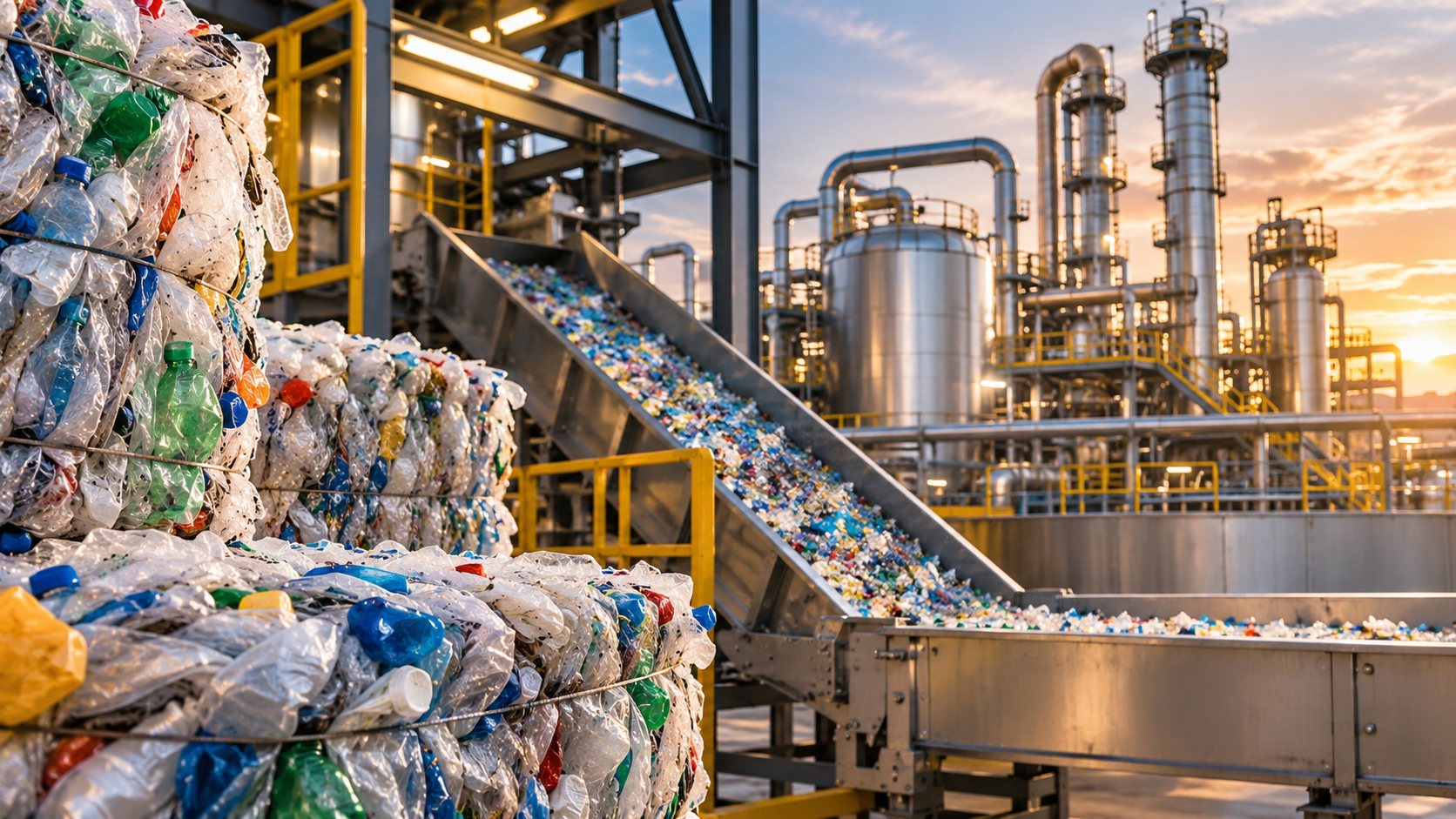
A new approach to the plastic problem is emerging in Southeast Asia, one that does not rely on incineration. In Pengerang, Johor, Petronas Chemicals is building Asia's largest advanced chemical recycling plant: a 33,000-tonne-per-year facility using Plastic Energy's pyrolysis technology, which heats mixed post-consumer plastic without oxygen to produce oil that can replace fossil feedstock for new plastics, including food-grade plastics. [1] In Serang, Indonesia, Pan Era has launched a smaller demonstration plant based on the same principle, converting waste plastic into 2,000 tonnes per year of pyrolysis oil for steam crackers. [2] After years of discussion, pyrolysis is now advancing in ASEAN. Its appeal is clear: unlike waste-to-energy, which burns plastic for power, pyrolysis converts plastic waste back into raw material for new plastics. When executed well, the same tonne of waste is remade rather than combusted, keeping carbon in the material loop. This is the real circular benefit. However, whether a plant achieves this depends less on the chemistry, which is proven, and more on execution, which often falls short.
The value lies in the premium, which is fragile
Consider the source of value. Pyrolysis oil sold as fuel typically earns US$500–650 per tonne, linked to crude prices. If the oil is clean enough for steam crackers and certified as circular feedstock, it can command US$1,100–1,600 per tonne. [3] This difference — the circular premium, supported by brand-owners' recycled-content commitments and regulations such as the EU's packaging rules — is central to the business case. As one investment analysis notes, that premium "is what carries the model"; if realised prices fall by a quarter, even a well-run project may only break even. [4] As a result, project economics depend on factors unrelated to reactor technology. In one advisory firm's model of a well-run 50,000-tonne plant, the base return is a modest 7.7 per cent, driven more by operating variables than by capital costs.
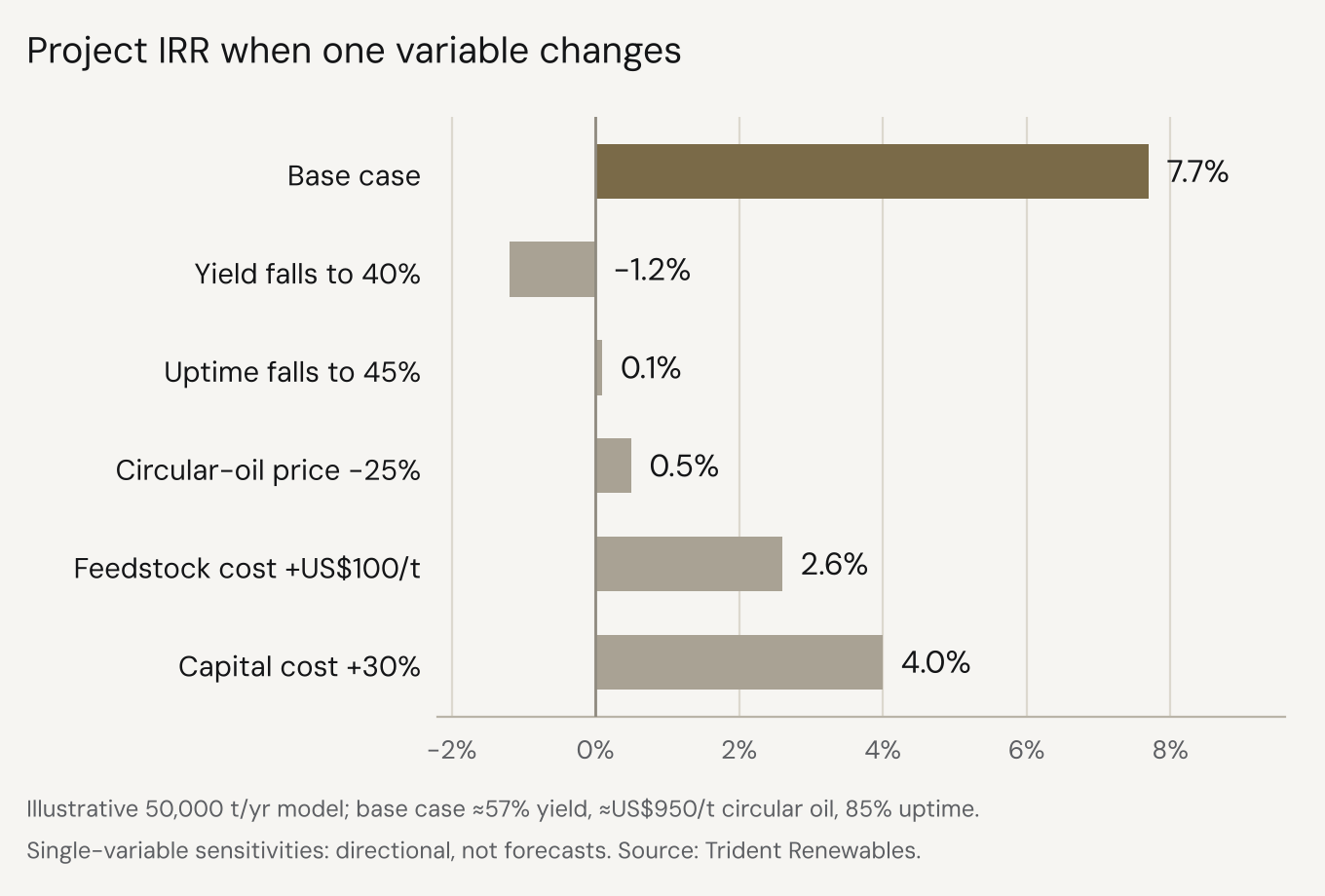
Yield and uptime are the most significant factors in the chart, and either can turn a positive return negative. Reactor design is not a variable. [4]
Feedstock quality determines profit, not technology
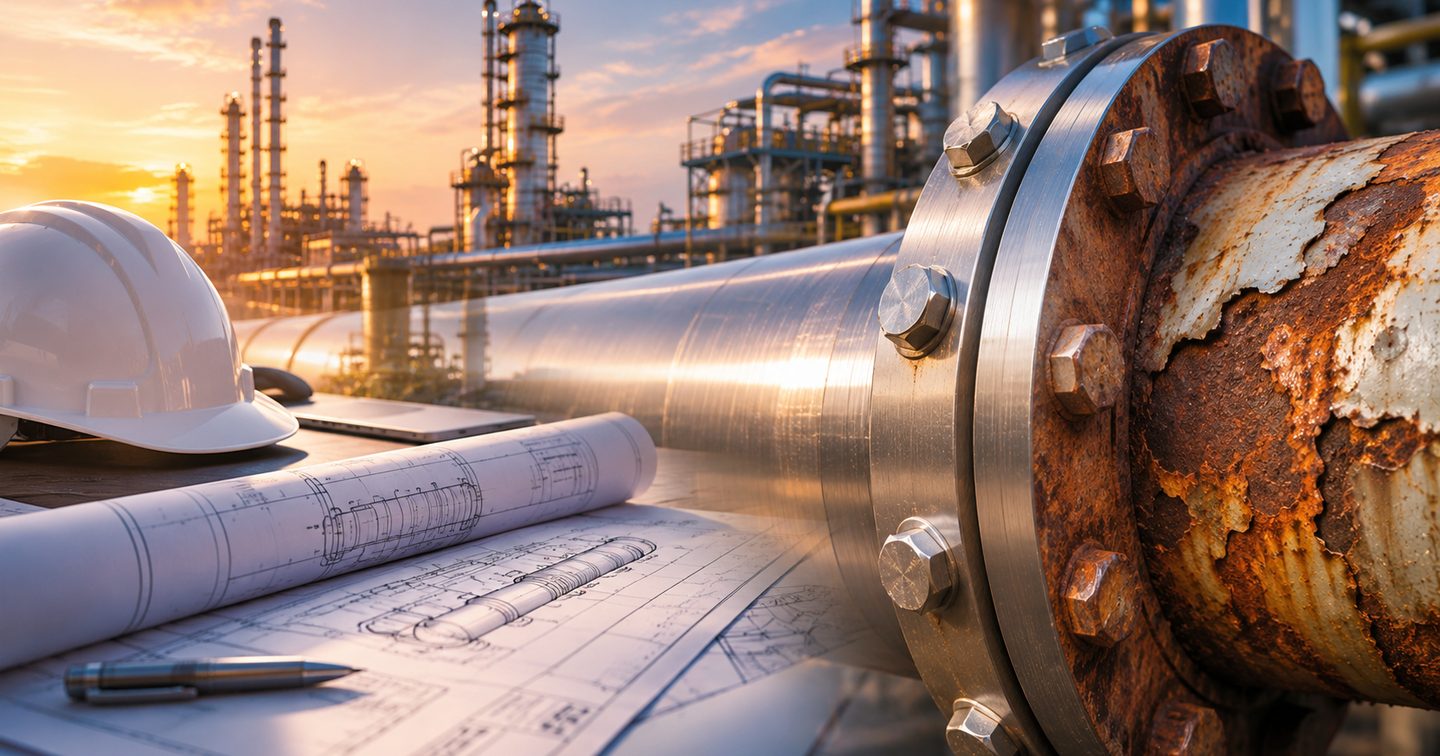
This is because yield and uptime depend on feedstock, not the machine. Clean, sorted polyolefins yield 70–85 per cent oil, while municipal waste often contains moisture, food residue, pigments, and, most critically, chlorine from PVC and oxygen from PET. These contaminants reduce yield, foul condensers, and corrode equipment, turning yield issues into uptime problems. [3][4] As the analysis notes, a pyrolysis plant has "a revenue line set by whatever shows up at the gate." [4] The much-heralded plant in Ashley, Indiana, was designed for 100,000 tonnes a year; by early 2024 it had processed around 2,000, roughly 5 per cent of capacity, and its operating subsidiaries filed for Chapter 11 with some US$178 million of secured debt, including US$172.5 million of green bonds. [4] The technology was not disproven. The plant could not run reliably, at the rate its financing assumed, on the feedstock it was actually fed. That is an execution failure, not a scientific one, and it is the risk every ASEAN project now inherits.
Why the region presents both challenges and opportunities
Southeast Asia presents both challenges and opportunities. The region generates large volumes of plastic waste, much of it mixed and poorly sorted, and has limited materials-recovery infrastructure. This creates significant feedstock-quality risks for projects. However, the region also offers advantages: large petrochemical complexes that can use the oil as feedstock, brand-owners with recycled-content commitments, and waste streams that often include a gate fee, improving project economics before any oil is sold. The components for a viable project exist; success depends on whether developers can assemble them effectively.
Implications for investors and developers
For investors, the key lesson from pyrolysis is that returns are determined before the reactor is built. Critical diligence should focus not on the technology license, but on three contracts and one assumption. First, secure a feedstock agreement that specifies volume, price, composition, and contamination limits, since yield depends on feedstock quality. Second, obtain a bankable offtake for certified circular product at the premium, rather than relying on selling off-spec oil as fuel. Third, confirm how the jurisdiction classifies pyrolysis, either as recycling or incineration, as this affects whether the output qualifies as recycled content. The key assumption is to underwrite the actual uptime achievable in the plant's third year, not the projected figure, and to treat the first plant as a learning asset, since returns are realised from subsequent facilities. [4]
Pyrolysis merits its ASEAN moment. However, only projects that approach it as a feedstock-and-offtake business, rather than a technology-driven solution, will achieve returns. As in other sectors across the region, success favours those who prioritise effective execution over innovative equipment. If you are considering this opportunity, we welcome a conversation. Talk to us →
Sources
- Plastic Energy — “PCG to Construct Asia's Largest Advanced Chemical Recycling Plant Using Plastic Energy's Technology” (Pengerang, Johor; 33 ktpa; FID Oct 2023, targeted operational H1 2026)
- Polyester Time — “Breakthrough in Chemical Recycling Indonesia: Pan Era Group Launches Pyrolysis Plant” (16 Nov 2026; Serang, Banten; ≈2,000 t/yr of plastic pyrolysis oil)
- Energy Solutions — “Plastic Pyrolysis 2026: Fuel vs. Circular Monomers & Yield Economics” (oil yields; fuel vs circular-feedstock prices; contamination)
- Trident Renewables — “Pyrolysis IRR: Why Execution, Not Technology, Decides the Return” (illustrative 50 kt/yr model and sensitivities; Brightmark Ashley case; de-risking checklist)
Part of the Ezra & Macquarie Insights series on where capital, risk and capability are moving across Asia.