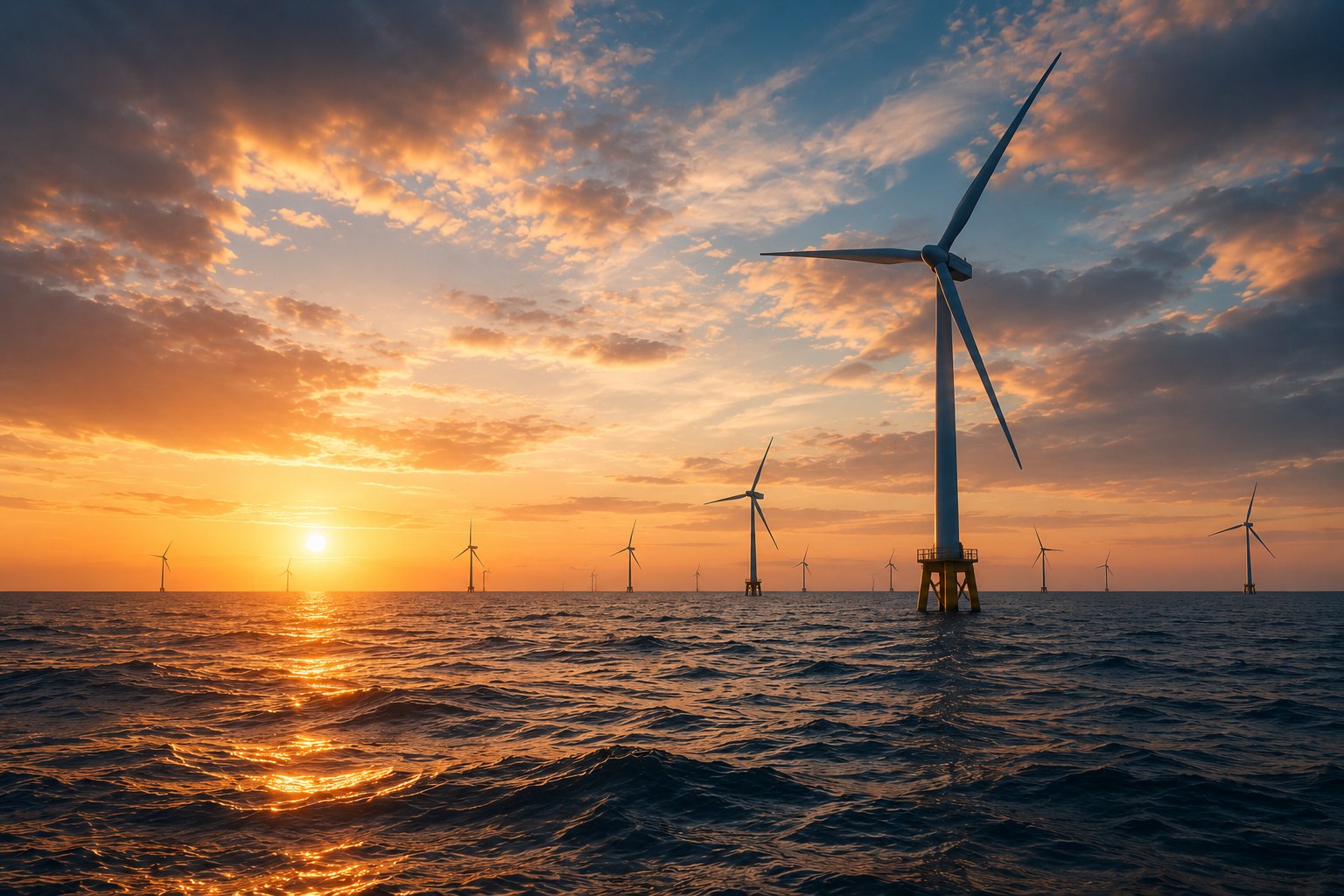
For almost all of the last ten years the story of renewable energy in Southeast Asia has been about solar. This is now starting to change. Offshore wind — which at present is only very lightly represented in the region — is moving from being just an ambition to one that is being put up for auction, and the figures involved are large enough to alter the power mixes of two of ASEAN's largest economies.
A resource the region has barely touched
The amount of potential is huge. The World Bank estimates the offshore wind technical potential in the Philippines at about 178 GW and that of Vietnam at around 600 GW — figures which are multiples of the total generation capacity currently installed in each of these countries. The difference in 2026 is that the potential is now being turned into actual procurement. In the Philippines, GEA-5 has been launched, marking the country's first auction dedicated solely to offshore wind, with a capacity of 3.3 GW and delivery expected between 2028 and 2030, while the bidding will take place in December 2026. Vietnam, whose PDP8 national power plan sets a target of around 6 GW from offshore wind by 2030, has produced a draft capital framework to provide developers with clearer guidelines. [1][2][3]
Wind also aligns with the account we have been giving in this series, since it tends to generate when solar does not, and a well-balanced combination of wind and solar can alleviate the grid and dispatch pressures that we flagged in Southeast Asia Outlook #2. The issue is not whether the resource is available, but whether the region can build it.
Why wind is harder than solar
Offshore wind is not the same as solar power at sea; it is a form of heavy-infrastructure development involving fixed-bottom and floating foundations, specialist installation vessels, improvements to ports, subsea cables and connection to the grid, and it therefore comes up against the same supply-chain and transmission limitations which currently affect the whole region. The requirement for bankability is also greater: long-term power purchase agreements, off-take that is creditworthy, clarity regarding foreign ownership, and a transmission plan capable of evacuating the power are all essential conditions, not optional additions. [4]
Significantly, the auction conditions introduced by the Philippines aim to link the developers' obligations with the government's progress regarding ports, transmission and permitting — a clear recognition that the gap between awarding a project and actually delivering it is precisely the area in which these programmes succeed or fail. [1]
What will determine the winners?
This is once more an execution problem rather than a technological one. The projects which manage to secure financial backing and then in fact get constructed will be those that had bankable offtake secured early on, demonstrated a feasible grid-connection and dispatch route, booked up the scarce vessels, ports and supply chain before anyone else, sorted out the permitting and local-content requirements in different jurisdictions, and had the local capability developed to operate the assets for 25 years. Each of these factors represents the gap between capital, risk and capability wherein delivery is achieved — the element that runs through all the advice we give.
The wind moment in Southeast Asia is coming on quickly, and whether it amounts to gigawatts on the grid or remains a pipeline of unrealised ambitions will depend — as has always been the case — less on the wind itself than on the way it is executed. With the region's offshore projects progressing from plans to implementation on the seabed, Ezra & Macquarie is increasing its focus on wind, assisting governments, developers and investors in turning auctions into assets. See how we help on energy & sustainability →
Sources
- Reccessary — “Philippines, Vietnam advance offshore wind with new auction and capital rules”.
- offshoreWIND.biz — “Philippines Sets New Timeline for Recalibrated Offshore Wind Auction, Targets December 2026 Bidding”.
- The Manila Times — “The next frontier: Offshore wind power” (World Bank technical-potential estimates).
- Watson Farley & Williams — “2026 Update: Offshore Wind in the Philippines”.
Part of the Ezra & Macquarie Insights series on where capital, risk and capability are moving across Asia. Potential figures are World Bank technical-potential estimates.